John F. Carlson
About the artist:
John F. Carlson (1875–1947) was a prominent American Impressionist painter celebrated for his evocative landscapes and mastery of light. Born in Sweden, Carlson immigrated to the United States at a young age and studied at the Art Students League in New York, where he was influenced by noted artists like Frank Vincent DuMond.
Carlson became associated with the Woodstock artist colony in New York, serving as director of the Woodstock School of Landscape Painting and later as president of the Art Students League. His works are recognized for their rich textures and sensitive rendering of seasonal changes, especially winter scenes, capturing the quiet beauty of rural America.
Carlson authored the influential book “Carlson’s Guide to Landscape Painting,” which is still referenced by artists today for its practical advice and insights into composition and technique. Throughout his career, Carlson exhibited widely, earning numerous awards and honors, and his paintings are held in major museums and collections.
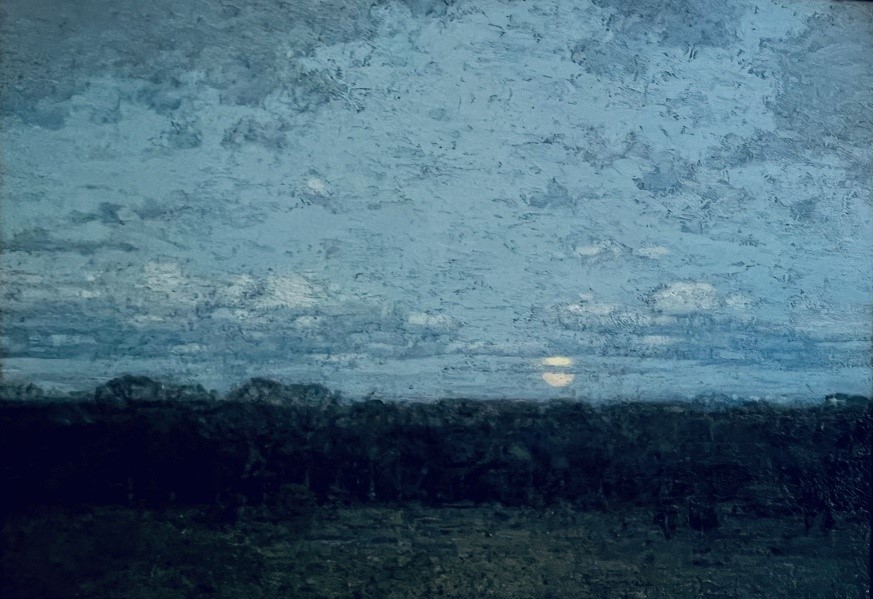
John F. Carlson (American 1874 – 1945)
Price - $8,950
His artistic legacy lies in his ability to convey atmosphere and mood, inspiring generations of landscape painters with his distinctive approach and dedication to teaching. Carlson’s profound impact on American landscape art remains evident in the enduring popularity of his work and contributions as a mentor and teacher. His paintings are widely collected and can be found in numerous museums, private and corporate collections.