William Sommer
About the artist:
William Sommer (American 1867–1949) was a renowned American modernist painter, celebrated as one of the central figures of the Cleveland School and a pioneer of the Northeast Ohio art scene. Born in Detroit, Michigan, Sommer began his artistic journey as an apprentice lithographer, a trade that introduced him to the principles of design and composition that would later shape his paintings.
After studying in New York and traveling to Europe in 1890 to immerse himself in the works of Old Masters, he absorbed influences from modernist movements such as Post-Impressionism and Fauvism, which became evident in his vibrant use of color and expressive brushwork.
Sommer moved to Cleveland in 1907, where he became deeply involved with a group of progressive artists and craftsmen who would eventually be known as the “Cleveland School.” He worked for the Otis Lithograph Company, but his passion lay in fine art. His rural home in Brandywine became an escape from the hot summers in urban Cleveland and gathering place for artists, writers, and musicians, fostering a spirit of collaboration and experimentation.
Sommer’s paintings often feature the Ohio landscape, local farms, and floral still lifes, rendered with bold, simplified forms and a palette of luminous, non-naturalistic colors that reflect both joy and spirituality.
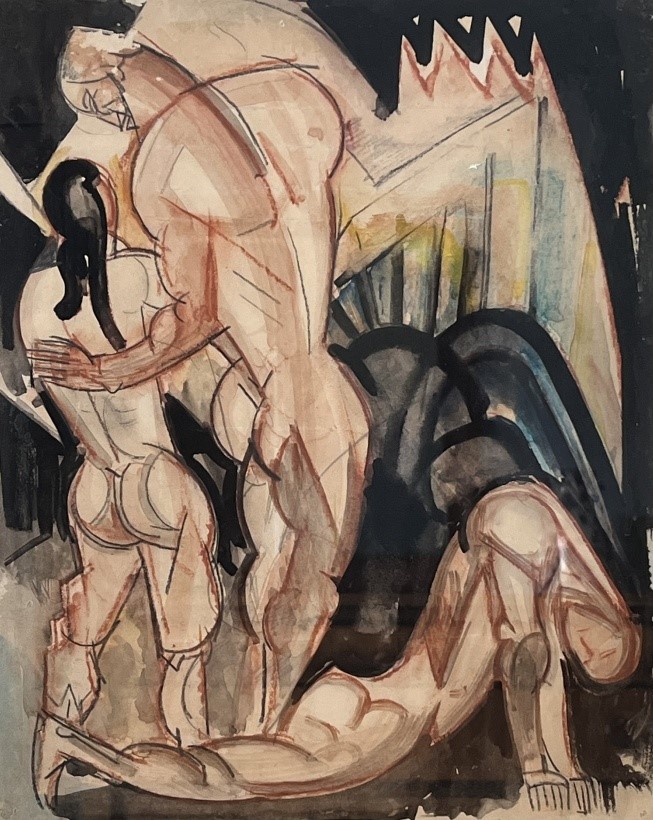
William Sommer (American 1867 – 1949
Price - $4,500
Over his career, Sommer exhibited widely, including at the Cleveland Museum of Art’s May Show, and his work was embraced by collectors and institutions alike. He was also a mentor to younger artists and a leader in the Kokoon Arts Club, which promoted modern art in the Midwest. Today, William Sommer is recognized not only for his innovative style and prolific output but also for his role in shaping the artistic identity of Cleveland and inspiring generations of artists in Ohio and beyond.